Push-Pull Self-Latching Connectors
A push-pull connector mates by pushing and releases by pulling the outer sleeve — no threads to start, no bayonet to turn, and no chance of a half-engaged joint. It is the right answer wherever a cable is connected and disconnected every day, and the wrong answer on a bracket that never moves.
How to choose a push-pull variant
The eight parts on this page share one latch. What separates them is sealing, contact density, shell material and whether power and signal have to travel together. Four questions settle it.
-
First: how many times will it be mated?
This decides whether push-pull is the right family at all. A threaded M-series joint is rated around 100–500 cycles and is the cheapest way to join two cables once. A push-pull latch is rated 2,000–5,000 cycles and is the cheapest way to join two cables a thousand times. Below roughly 50 cycles a year, push-pull is paying for cycles you will never use.
-
Second: sealed while mated, or sealed while open?
Most sealed circulars only hold their rating with the halves joined. If the plug spends time unmated on a wet surface — a hose-down bay, a dock-side cabinet, a rig that is struck every night — you need individual contact seals, not just a shell seal. That is the F-series, and it is the only part here rated IP68 with the cap off.
-
Third: are two identical sockets sitting side by side?
A push-pull latch is fast precisely because it needs no keying to line up, which also means a plug can go into the wrong socket. If one device has two look-alike ports carrying different signals, specify the keyed K-series: its pronounced keyway and recessed insulator make cross-mating physically impossible. Order both halves together — a keyed plug is useless against an unkeyed socket.
-
Fourth: is power travelling with the signal?
If a cable has to carry supply and I/O to the same device, one hybrid shell replaces two connectors and one panel cut-out. The power contacts are larger and offset so they make last and break first, which keeps the signal pins from being the ones that arc.
-
Then decide the shell material and the size
A machined brass shell gives you shielding and a −55…+200 °C window; a moulded PBT shell cuts weight and cost but loses shielding and tops out around 1,000 cycles and IP64. On the small end, the S-series packs up to 16 contacts into a 9 mm shell — but its lower latch force is easier to unplug, which is a problem if the cable gets yanked sideways under load.
Part numbers in this family
-
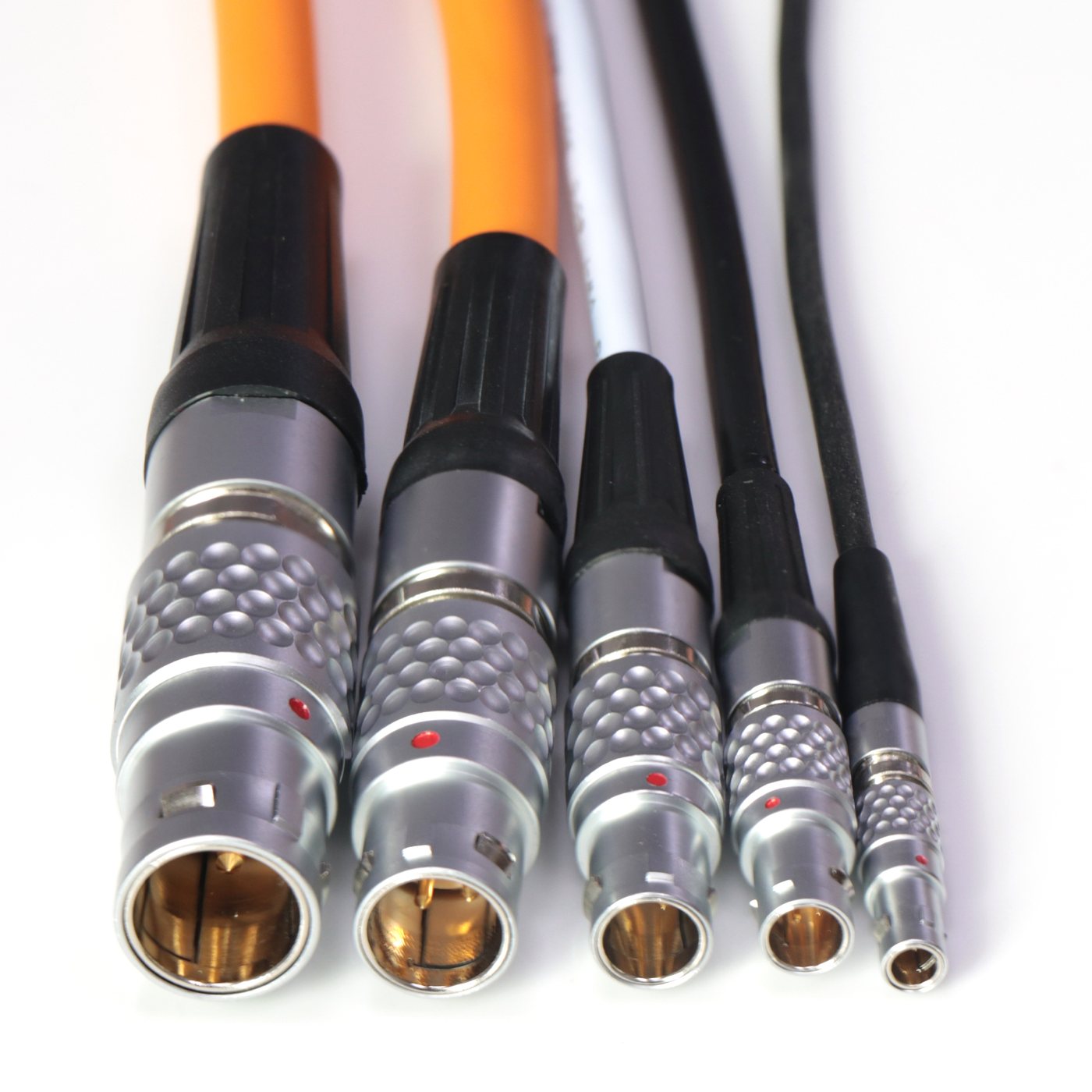 B-Series Push-Pull Connector B-series push-pull self-latching connector, 2 to 32 contacts, up to 5000 mating cycles, IP50 or IP68, in brass or anodised aluminium. B (general purpose, self-latching)2 to 32, solder, crimp or PCB
-
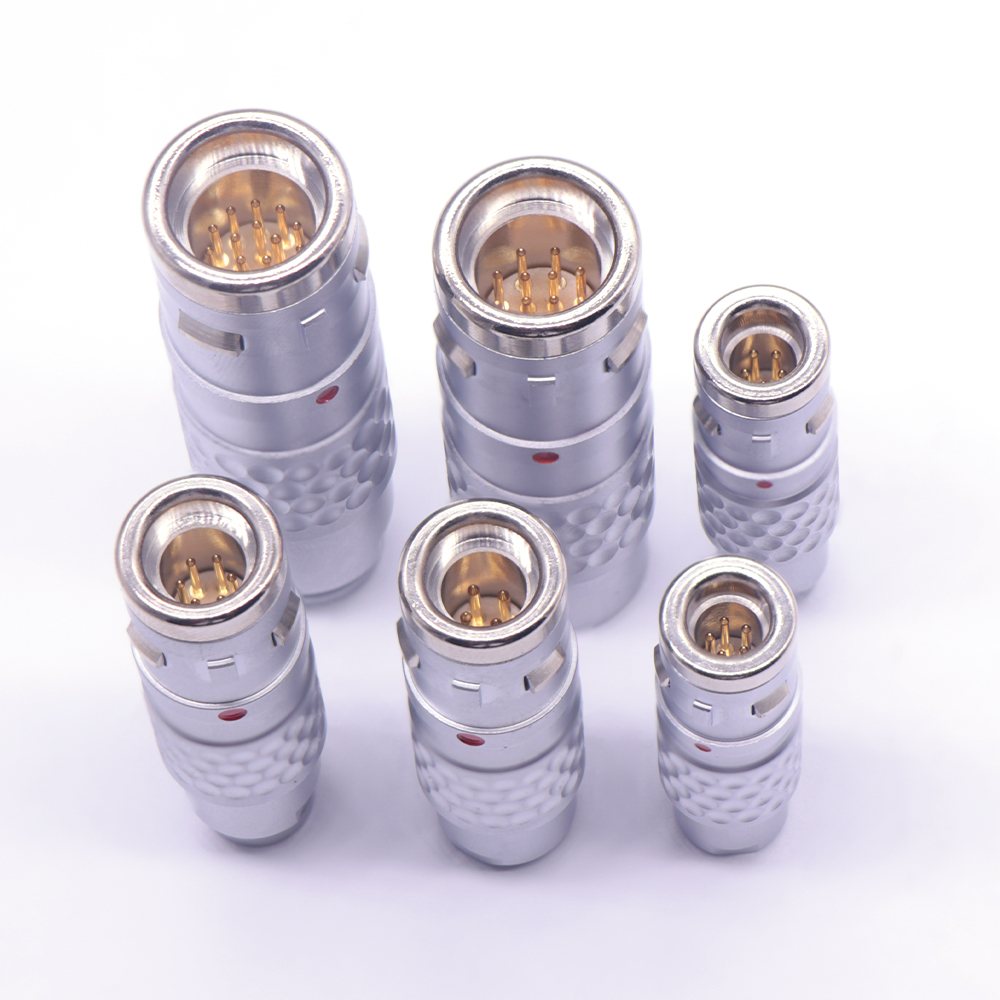 K-Series Push-Pull Connector, Keyed K-series keyed push-pull connector with three mechanical codings and a recessed insulator, for high-mating-count instrument interfaces. K (keyed, 3 codings)2 to 30, solder or PCB
-
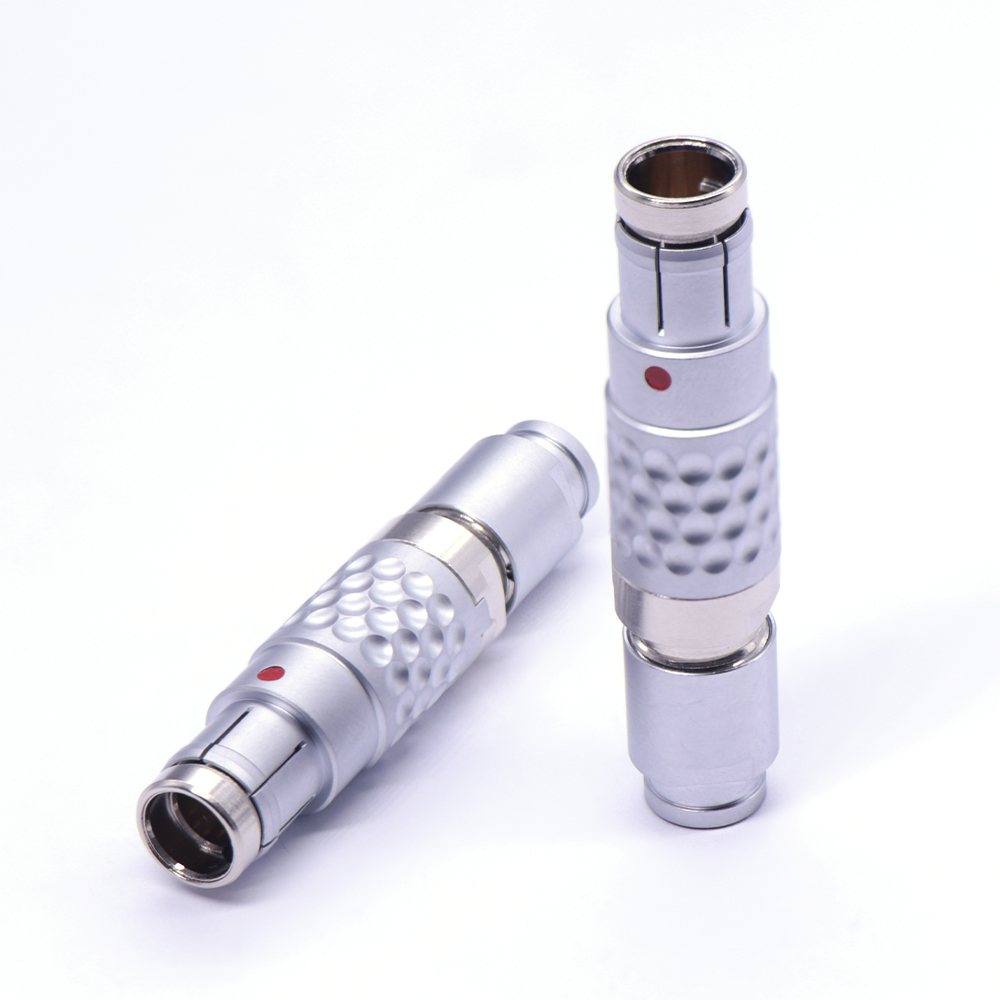 F-Series Push-Pull Connector, Sealed F-series push-pull connector sealed to IP68 both mated and unmated, for outdoor and washdown equipment. F (watertight, mated and unmated)2 to 19, solder or crimp
-
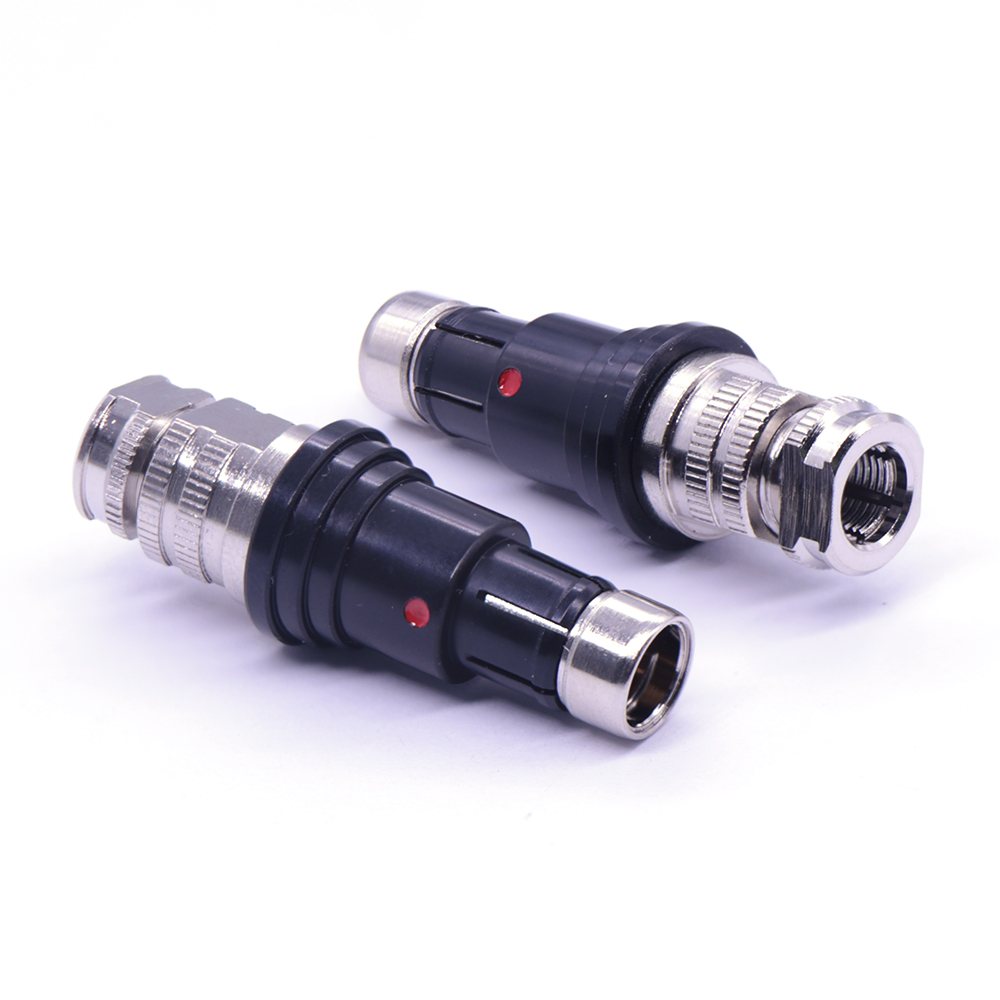 S-Series Push-Pull Connector, Compact Compact S-series push-pull connector, up to 16 contacts in a 9 mm shell, for handheld and wearable equipment. S (compact, self-latching)≈ 9 mm
-
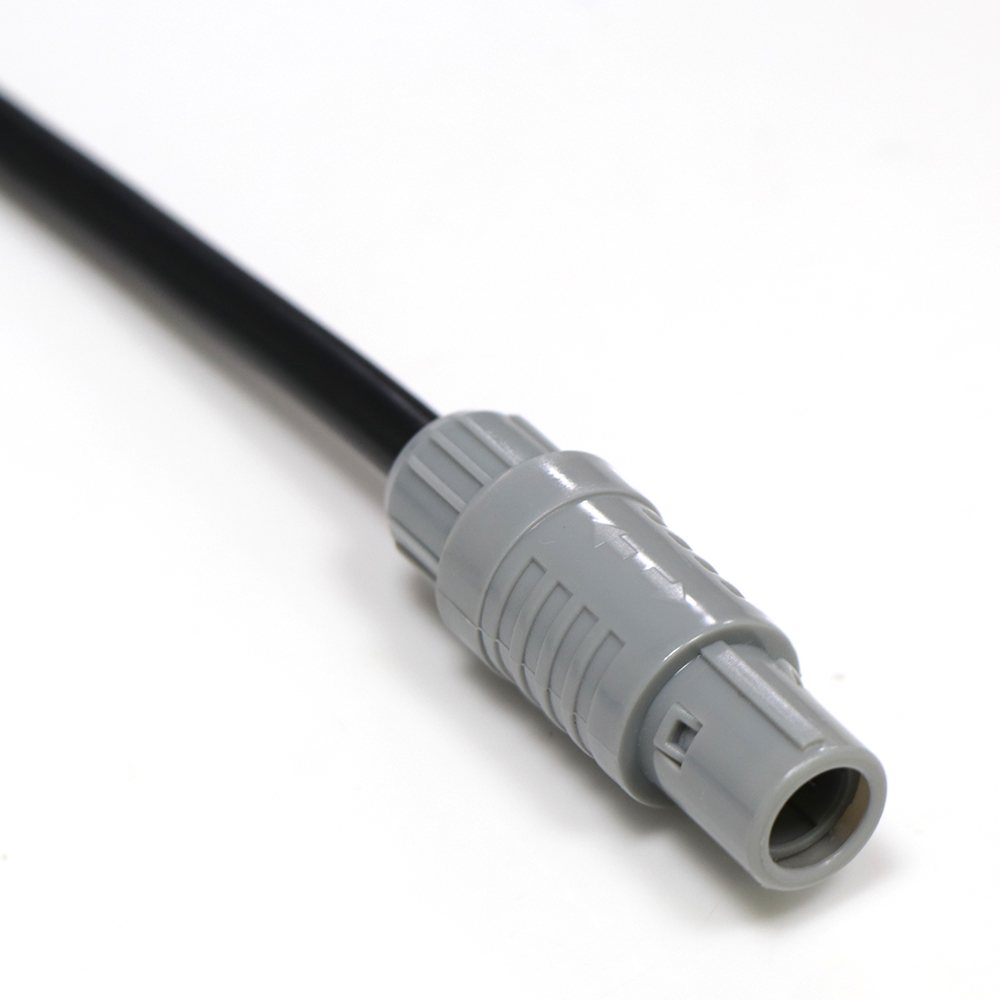 P-Series Push-Pull Connector, Plastic Plastic-shell push-pull connector with the same latch geometry as the metal series, for cost-sensitive indoor equipment. P (plastic shell, self-latching)2 to 14, solder
-
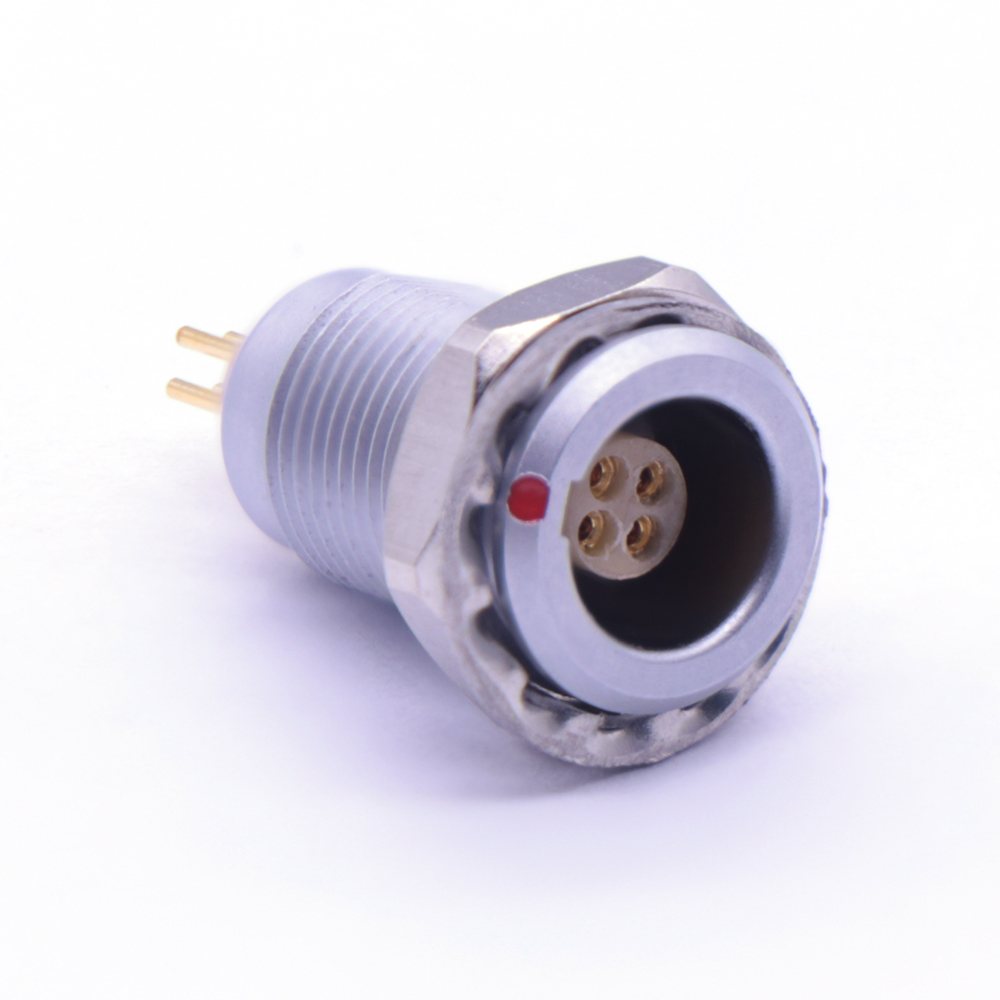 Push-Pull Panel Receptacle, Sealed Panel-mount push-pull receptacle with O-ring seal, straight or 90° PCB pins, IP68 when mated. Panel, front or rear, single-hole or flangePCB pins, solder cup or wire leads
-
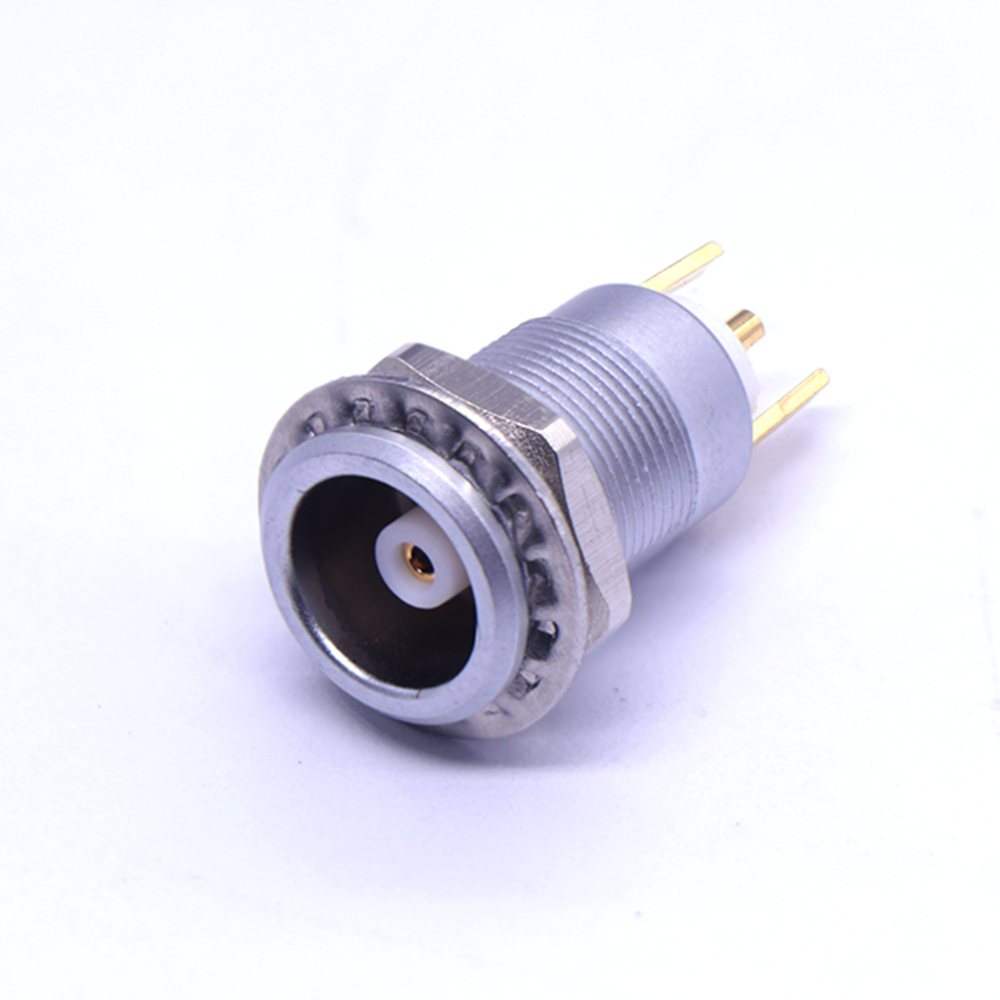 Hybrid Push-Pull Connector, Power + Signal Mixed-contact push-pull connector combining 2–4 power contacts with up to 12 signal contacts in one shell, IP68. 2–4 power + up to 12 signal10 A (power) / 3 A (signal) per contact
-
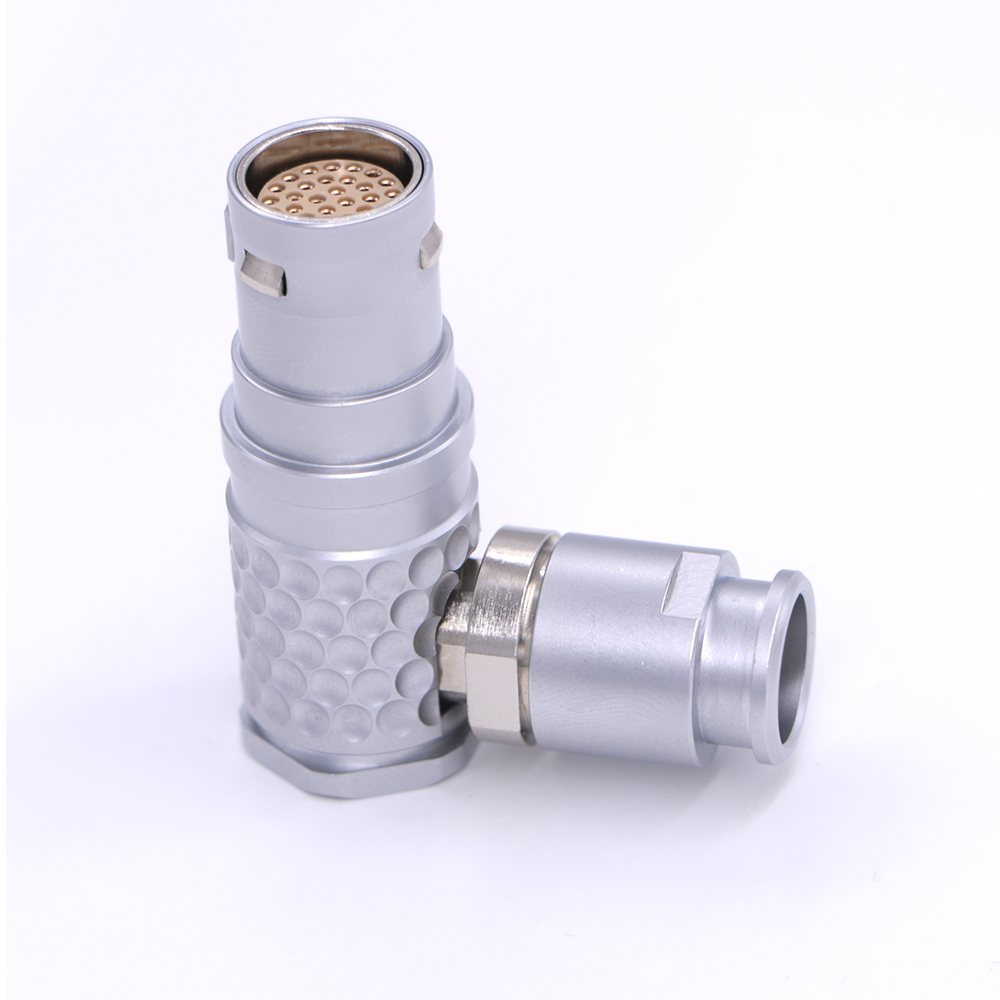 Push-Pull Connector, Easy-Release Latch Push-pull connector with a reduced latch force for high-cycle mating, targeting 10,000 operations in operator-handled equipment. ≈ 15 N (vs 25–40 N standard)≥ 100 N axial
Every push-pull part, side by side
A dash means the figure is not part of that part's published specification. Contact counts are the range the shell accepts, not a single stocked variant.
| Part | Series | Contacts | Current | IP mated | IP unmated | Cycles | Shell | Pick it for |
|---|---|---|---|---|---|---|---|---|
| PP-B | B general | 2–32 | 15 A | IP50 / IP68 | — | ≥ 5,000 | Brass or Al | The default; widest contact range |
| PP-K | K keyed | 2–30 | 10 A | IP50 / IP68 | — | ≥ 5,000 | Brass, chrome | Two look-alike ports on one panel |
| PP-F | F sealed | 2–19 | 8 A | IP68 (1.2 m/24 h) | IP66 | ≥ 2,000 | Brass + elastomer | Wet or washdown between shifts |
| PP-S | S compact | 2–16 | 5 A | IP50 / IP67 | — | ≥ 5,000 | — | Handheld and wearable, 9 mm shell |
| PP-P | P plastic | 2–14 | 6 A | IP50 / IP64 | — | ≥ 1,000 | PBT UL 94 V-0 | Cost and weight, no shielding |
| PP-R | Panel recept. | — | — | IP68 | IP67 with cap | ≥ 5,000 | Brass, chrome | The enclosure half; specifies the cut-out |
| PP-H | Hybrid | 2–4 power + ≤ 12 signal | 10 A / 3 A | IP68 | — | ≥ 2,000 | Brass, chrome | Supply and I/O in one cable |
| PP-ER | Easy release | 2–19 | — | IP50 / IP67 | — | ≥ 10,000 | — | Low release force, 10k cycles |
PP-R takes its contact and rating figures from the mating insert, so those cells are blank. PP-ER trades a lighter release force — about 15 N against the 25–40 N standard — for a shorter retention figure; send the mating part number and we confirm the pair in writing.
Coupling types compared
Push-pull is one of five ways to hold two connector halves together. The ranges below are the usual envelope for each type, not a specification of any single part.
| Type | To mate | To release | Typical cycles | Vibration | Blind mate |
|---|---|---|---|---|---|
| Push-pull | Push the plug home | Pull the outer sleeve back | 2,000–5,000+ | High | Good |
| Threaded | Turn the coupling nut | Turn the coupling nut | 100–500 | Highest | Poor |
| Bayonet | Push, then quarter turn | Turn back, then pull | 1,000–5,000 | High | Fair |
| Latch-lock | Push until the latch clicks | Press the latch tab | ≈ 1,000 | Medium | Good |
| Snap / friction | Push in | Pull out | 500–1,000 | Low | Fair |
Threaded scores highest on vibration because the thread is a continuous locking surface. Push-pull scores highest on cycles because it has no thread to wear — the latch rides on a hardened ring.
Termination — and what it does to the joint
The contact termination is usually decided by your assembly process rather than the electrical requirement. All three are available across the series.
| Termination | Done by | Re-terminable | Best for |
|---|---|---|---|
| Solder cup | Your bench, or ours | Yes, with care | Prototypes, low volume, repair depots |
| Crimp | Tooling only | No — new contact | Volume harnesses, vibration, field service kits |
| PCB pin | Dip or reflow | No | Panel mount on a backplane, right-angle exits |
| Wire leads | Ours, moulded | No | Sealed assemblies where the boot is part of the seal |
Crimp needs the matching insertion and extraction tooling, which is a one-off cost. Above a few thousand pieces per year it is repaid by assembly time alone.
What "LEMO-compatible" actually means
Buyers ask for it, and the honest answer is narrower than the phrase suggests.
| Statement | True? | Detail |
|---|---|---|
| The latch geometry follows the same LEMO / ODU pattern | Yes | Push to mate, pull the sleeve to release |
| A given size and keying will physically intermate | Usually | Depends on shell size, keying and contact arrangement |
| Every part number is interchangeable | No | Size and coding are only half of it — pin assignment matters |
| We will confirm in writing before you commit | Yes | Send the counterpart part number with your inquiry |
Intermateability is a legal question as much as a mechanical one. We answer it in writing against a specific part number, never as a blanket claim.
Choosing between push-pull self-latching connectors
Will your B-series mate with a LEMO socket of the same size?
Mechanically, most likely — the latch geometry follows the same pattern. But intermateability depends on shell size, keying and contact arrangement, and it is a legal question as much as a mechanical one. Send us the counterpart part number and we confirm in writing before you commit to tooling.
Push-pull or threaded — which resists vibration better?
Threaded, on paper: the thread is a continuous locking surface and it is rated for a higher vibration class. In practice a push-pull latch with a hardened retaining ring does not back off either — it fails by wear rather than by loosening. Choose on cycle count, not on vibration, unless you are on a genuinely high-shock mount.
Why is the F-series only rated 2,000 cycles when the B-series does 5,000?
Because the F-series carries individual contact seals plus a shell seal, and elastomer seals wear faster than a metal latch ring. That is the trade: a joint that survives being dropped in water is a joint you rebuild sooner.
Which half should I specify first — the plug or the receptacle?
The receptacle. It fixes the panel cut-out and the fixing method, so it drives the enclosure drawing and carries the longer lead time. Choose the plug afterwards from the matching shell size.
Can you supply a moulded cable assembly rather than loose connectors?
Yes, and it is the majority of what we ship. Overmolded or booted strain relief, cable length from 100 mm, screened or unscreened, with the backshell sealed to IP68 where the series allows it.
Do you crimp or solder?
Both, on the same series. Crimp is the volume answer and the better one under vibration, but it needs matching insertion and extraction tooling. Solder is easier to prototype and to repair. Tell us which your service bench uses.
Before you specify
- Push-Pull vs Threaded Coupling: When the Extra 3 Seconds Matters A threaded M12 takes about four seconds to mate. A push-pull takes under one. That difference is worth money only in three specific situations. The long version of question one: what the extra three seconds costs on a threaded joint, and when that is the right trade.
- Mating Cycles and Contact Resistance: The Number Nobody Tests A connector rated for 5,000 cycles does not stay at its initial contact resistance for 5,000 cycles. What the datasheet leaves out is the drift. Why a 5,000-cycle latch and a 5,000-cycle contact are two different claims, and which one your test report actually measures.
- Overmolded vs Heat-Shrink Strain Relief: Where Each One Fails Heat-shrink is cheap, repairable and needs no tooling. Overmolding is sealed, repeatable and cannot be fixed. Choose by the failure you can afford. The backshell decides whether the seal and the cycles above survive field use — here is where each option fails.
- IP67 vs IP68 vs IP69K: What the Second Digit Actually Promises IP67 is a defined test. IP68 is not — the manufacturer declares the depth and duration. IP69K is a different test entirely, aimed at a jet, not at immersion. Relevant before you pick the F-series: mated and unmated are different ratings, and only one of them is usually tested.
What else we build
- M-Series Circular Connectors 12
- HR / GL Miniature Circular Connectors 7
- LC Push-Lock Connectors 6
- Plastic Circular Connectors 8
- Industrial Ethernet Connectors 9
- IP68 Heavy-Duty Power Connectors 8
- Fiber Optic Connectors 6
- Snap-Lock & Single-Pair Ethernet 5
- Audio & Communication Connectors 6
- Automotive & Battery Connectors 7
- Medical-Grade Connectors 6
- Custom Overmolded Cable Assemblies 8
Need something not listed?
These are the parts already in tooling. Most orders are something else — send the drawing and we will quote it the same way.